Xerius

Building better foundations for digital products.
At Xerius, I worked on the design foundations for their back-office and customer-facing applications. With multiple products, teams and brands involved, keeping designs consistent and organised was an important part of the work.
My role covered everything from restructuring the Figma workspace and managing brand assets to designing UI components, contributing to user flows and working closely with the development team.
Some parts of this project are confidential, so I can’t share the original designs or internal applications.
Making sense of the mess
Over time, hundreds of Figma files had accumulated across different projects and teams. There were drafts, outdated designs, multiple final versions and files without clear ownership. Finding the right design, or even knowing which version was still in use, wasn’t always straightforward.
I started by mapping out the existing files, identifying what was still relevant and figuring out who was responsible for each project. From there, I helped organise the workspace around brands, projects and their respective teams, creating a structure that was easier to navigate and maintain.
The same challenge existed with brand assets. There wasn’t a clear system for organising or sharing them, so I helped establish a more consistent structure for managing assets across the organisation.
The goal wasn’t just to clean things up, but to make sure the workspace would remain manageable as new projects and assets were added.
Final.fig. Final-v2.fig. Final-FINAL.fig.
We’ve all been there. The challenge isn’t just cleaning things up, it’s creating a system that keeps them organised.
Building better foundations
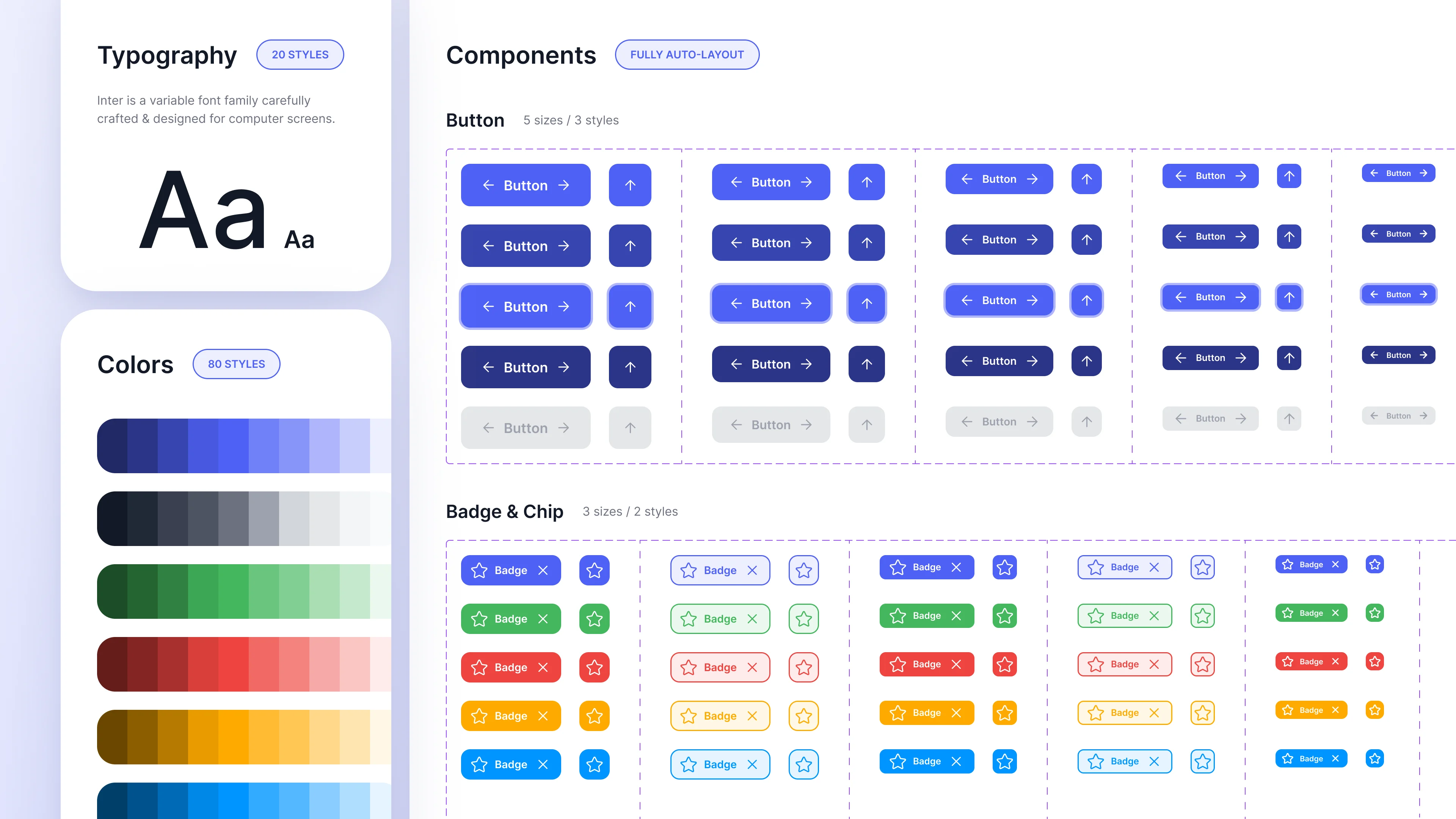
Another important part of my work was restructuring large Figma design files into dedicated libraries for foundations, components and individual products.
This made the design system easier to navigate and maintain, while creating a clearer distinction between shared elements and product-specific designs.
Alongside managing design tokens and brand assets, I designed and refined UI components and contributed to user flows across different applications.
The focus was on creating a structure that designers could work with consistently, without making things unnecessarily complicated.
Connecting design and development
Having a background in frontend development turned out to be particularly useful in this project.
I worked closely with the developers responsible for implementing the component library. Understanding how components are built helped us communicate more easily about technical constraints, component behaviour and reusability.
Rather than treating design and development as two separate steps, we could work together on solutions that made sense on both sides.
I don’t just design components. I understand how they’re built.
That makes it easier to find solutions that work for both designers and developers.
More than a collection of components
A design system is only useful when people can actually work with it.
My work at Xerius focused on creating a more manageable design environment, maintaining consistency across applications and helping bridge the gap between design and implementation.
It’s the kind of work I enjoy most: combining design, technical understanding and collaboration to make complex things easier to work with.